


Linda ✓, Mark ✓ and 5,000+ others love our products!
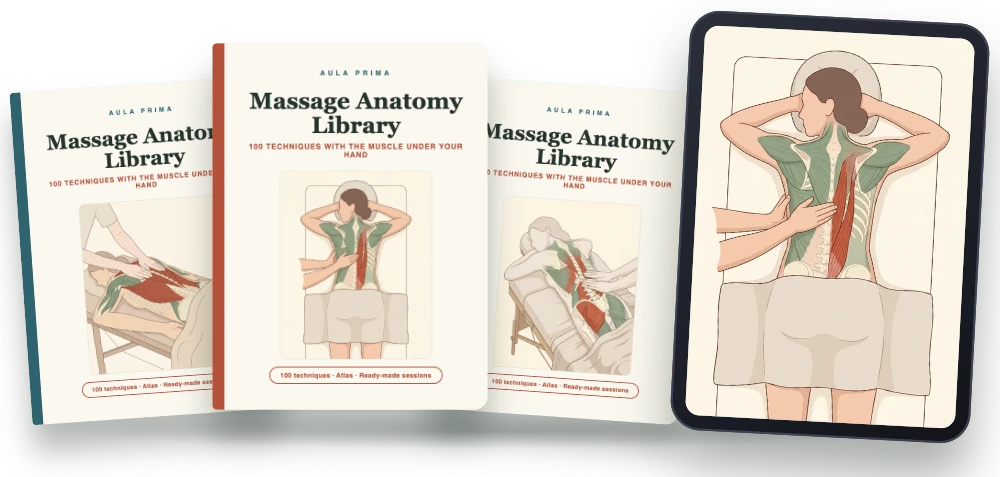
Massage Anatomy Library
Massage Anatomy Library
💆 Discover the science of massage through a complete visual guide to human anatomy and muscle function
🧠 Learn about muscles, trigger points, movement, and body structures with clear explanations and practical anatomical references
✨ Deepen your knowledge, improve your massage techniques, and gain the confidence to understand the body and deliver more effective treatments
Couldn't load pickup availability


Hurry! Sale ends in:

Massage Anatomy Library

100 massage techniques with the muscle under your hand, the pressure and the error to avoid
Effleurage, kneading, friction and static pressure by area: back, neck, arms, legs, abdomen and the client with special needs. Every card tells you which muscle is underneath, how much pressure, in what direction and at what rhythm, the common errors with their correction, and when to stop or refer.
 $9.99
7-day guarantee · Secure payment · Instant digital access
One-time payment in USD · Credit and debit cards · Secure checkout
See what a card looks like
Every technique has the same structure, so you always know where to look. These are some of the 100. Swipe to see them.
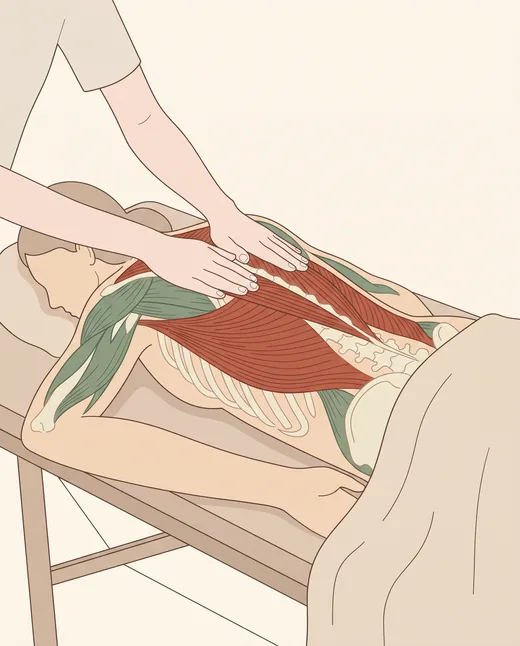
Superficial effleurage
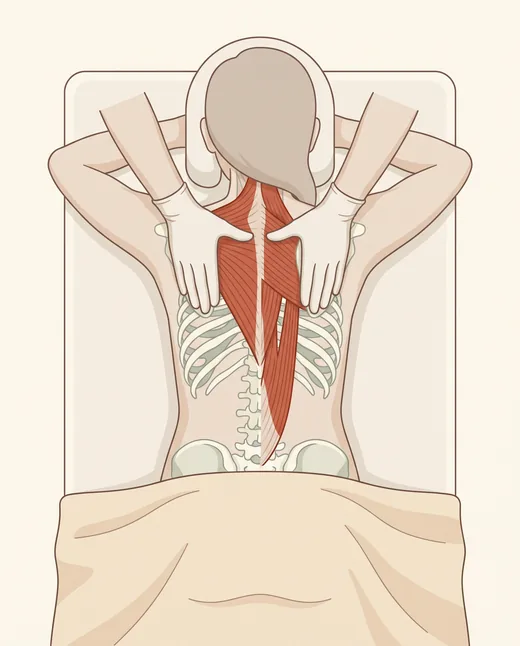
Middle trapezius
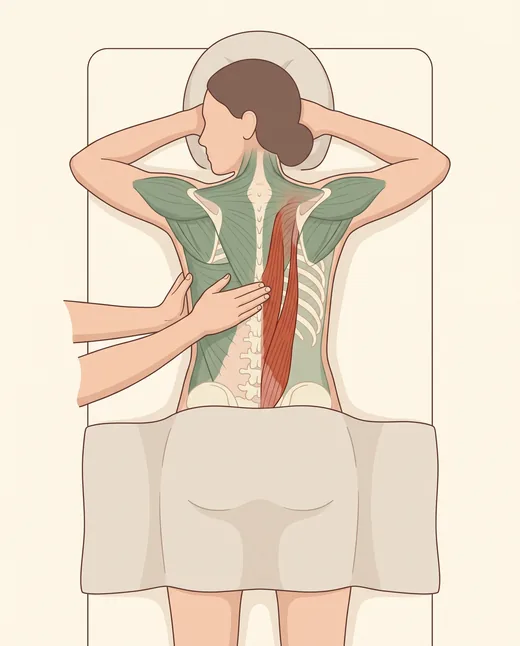
Erector spinae
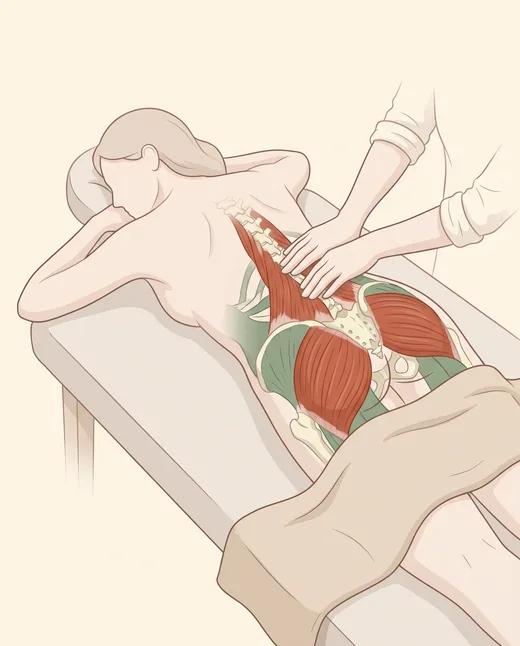
Sacral region
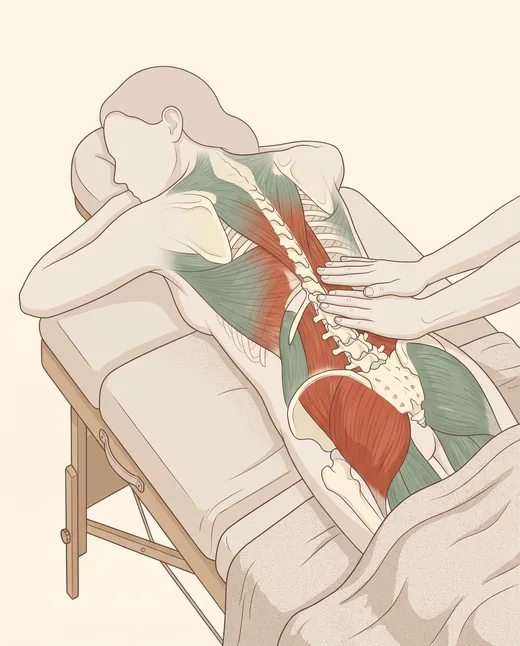
Low back with history of disc herniation (adapted)
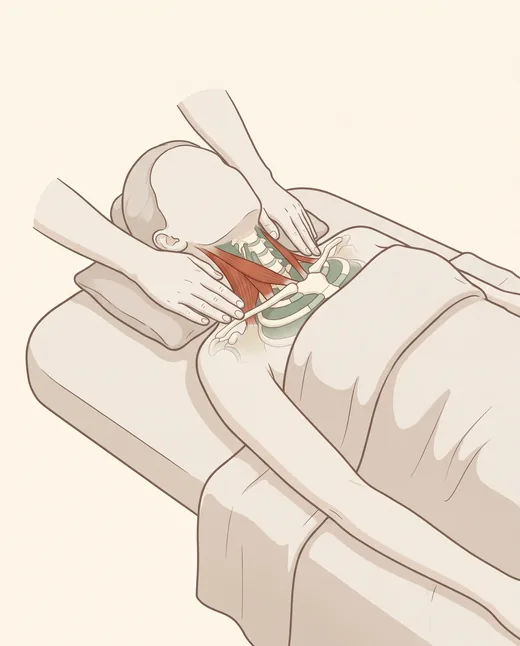
Scalenes
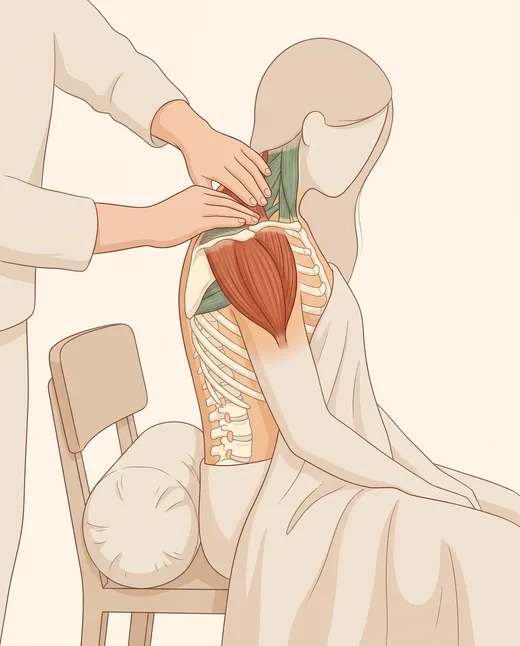
Deltoid
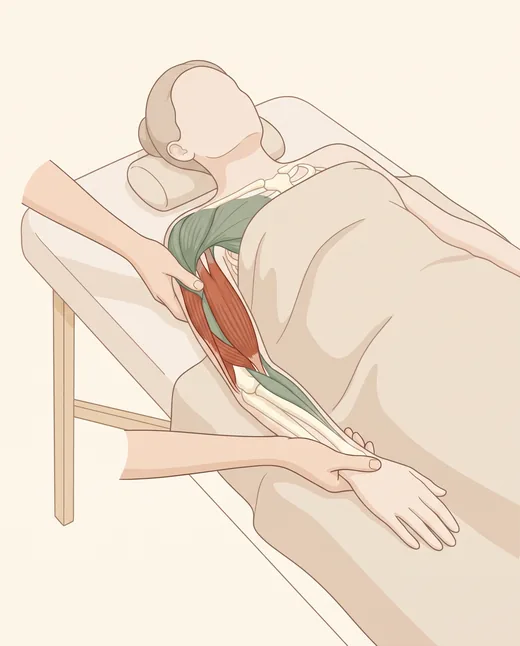
Triceps brachii
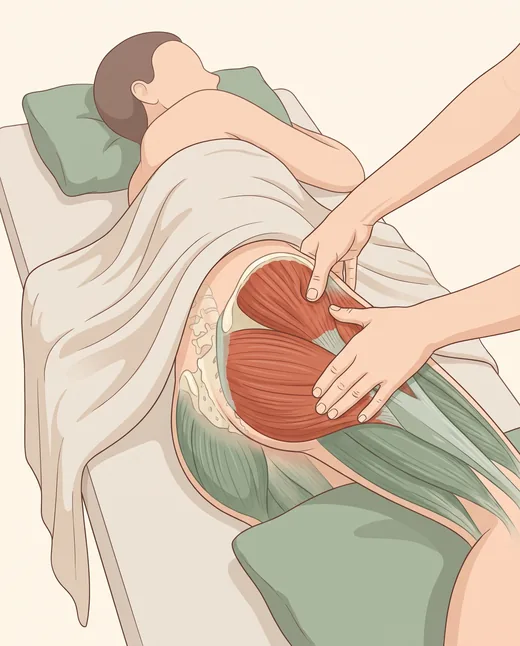
Gluteus medius
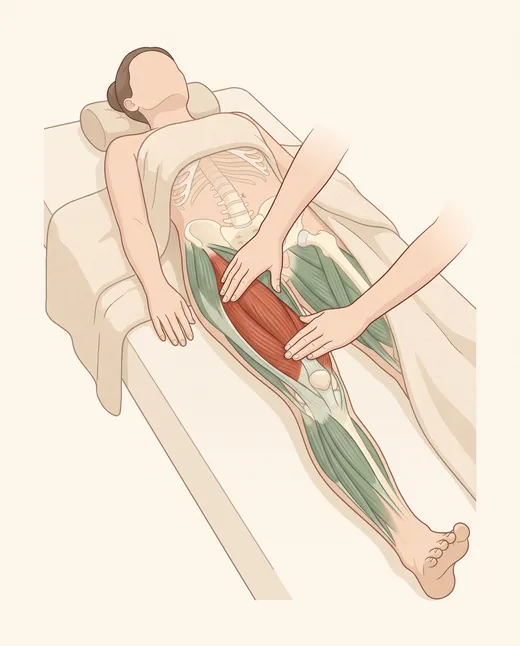
Quadriceps
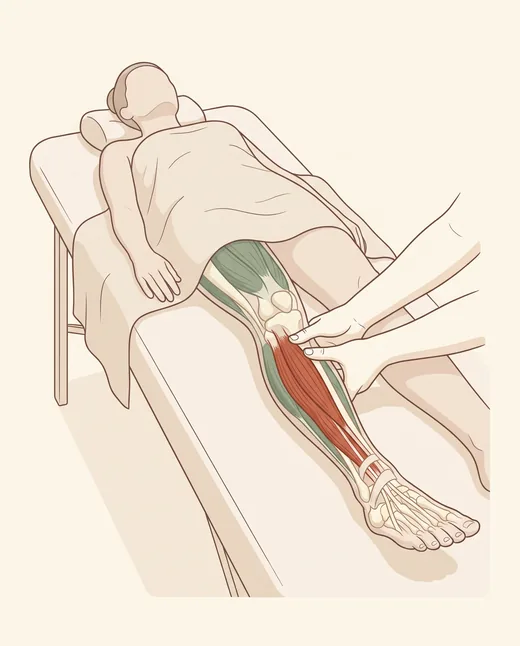
Tibialis anterior
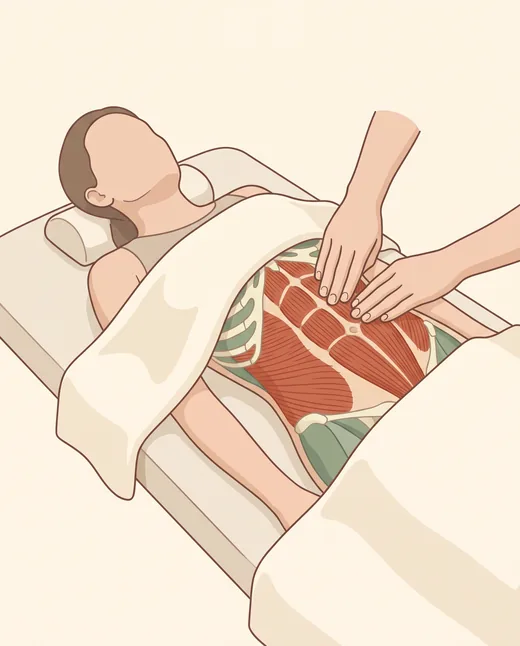
Rectus abdominis and obliques
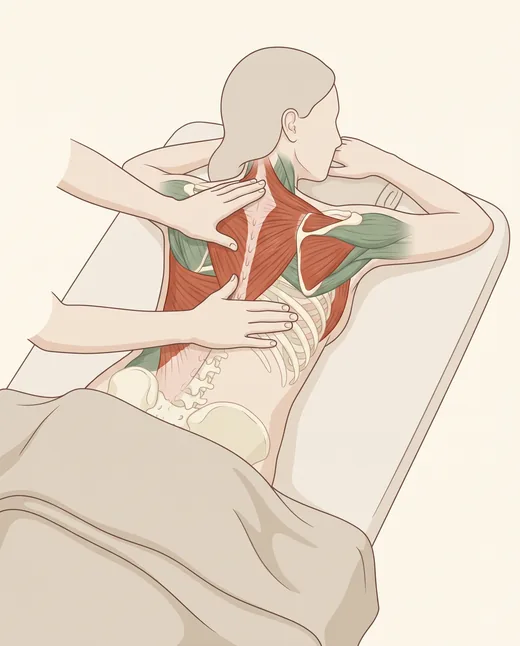
Postpartum client
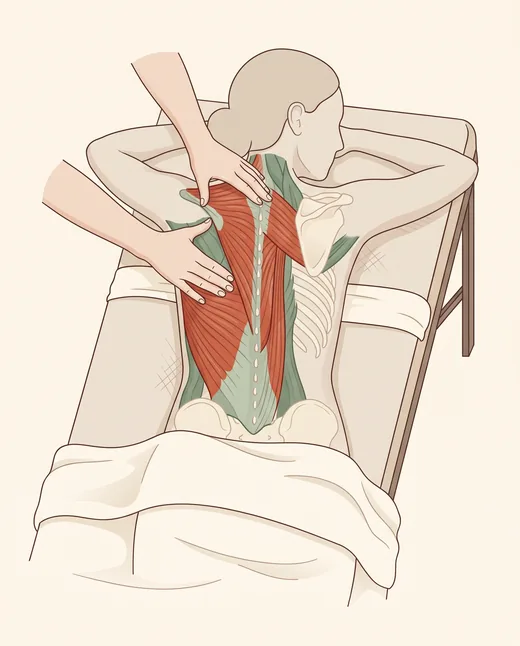
Decontracting massage, 45 minutes
You massage with your hands, but without knowing what is underneath
You repeat what you were taught
“Do an effleurage and then knead.” It works, but when a client asks which muscle you are working or why there, the answer falls short.
A client arrives with particularities and you are unsure what to adapt
A pregnant client, an older adult or someone who reports back discomfort. It is not clear what to consider, what to simplify, what to avoid and when to refer.
Your hands, thumbs and back pay the price
You press with the thumb, with the arm straight or with the trunk bent, and finish the day exhausted. Body mechanics can be taught too, and almost nobody explains them.
What every technique gives you
100 techniques, every one built on the same card structure.
The muscle under your hand
Origin, insertion and action of the muscles underneath in each technique, so you understand what you are doing and do not just repeat it.
Pressure from 1 to 10, direction and rhythm
Starting, working and maximum pressure, where the hand goes and how fast. A scale you can learn and communicate, with no force measurements.
The specific error, with its correction
What usually goes wrong, why it happens, how to correct it and what to say. Written as sentences you can use at the table, not as theory.
When to stop and when to refer
Considerations by type of client and warning signs that require stopping and referring. Educational: the instruction of the client's health professional always prevails.
Everything you will find
8 chapters by area and type of client, plus the Atlas, the ready-made sessions and the principles of good massage. Tap a chapter to see its techniques.
Chapter 1 · Basic strokes14 techniques
- Initial contact and centering
- Superficial effleurage
- Deep effleurage
- Palmar kneading
- Digital kneading
- Knuckle kneading
- Skin rolling
- Pinching petrissage
- Circular friction
- Transverse friction
- Thumb static pressure
- Forearm static pressure
- Cupping and hacking tapotement
- Vibration and closing contact
Chapter 2 · Back and spine18 techniques
- Upper trapezius
- Middle trapezius
- Lower trapezius
- Latissimus dorsi
- Rhomboids
- Levator scapulae
- Erector spinae
- Quadratus lumborum
- Interscapular region
- Sacral region
- Gluteal region in back massage
- Serratus posterior and intercostals
- Thoracolumbar fascia
- Paraspinal stretching with side-lying
- Full back sequence
- Low back without history of injury
- Low back with history of disc herniation (adapted)
- Back tension from desk posture
Chapter 3 · Neck and shoulders14 techniques
- Sternocleidomastoid
- Scalenes
- Suboccipitals
- Splenius capitis and cervicis
- Rotator cuff muscles
- Pectoralis major
- Pectoralis minor
- Deltoid
- Neck sequence
- Neck passive stretching
- Tension-type headache pattern
- Stiff shoulder
- Seated chair massage for neck and shoulders
- Neck contraindicated zones
Chapter 4 · Arms and hands10 techniques
- Biceps brachii
- Triceps brachii
- Forearm flexors
- Forearm extensors
- Brachioradialis and lateral elbow
- Hand effleurage
- Thenar and hypothenar eminences
- Finger and wrist mobilization
- Full arm sequence
- Hand and wrist after keyboard use
Chapter 5 · Legs, glutes and feet20 techniques
- Gluteus maximus
- Gluteus medius
- Piriformis
- Quadriceps
- Psoas region (abdominal approach)
- Hamstrings
- Gastrocnemius
- Soleus
- Iliotibial band
- Adductors
- Tibialis anterior
- Plantar fascia
- Foot massage
- Ankle and toe mobilization
- Hip flexors
- Tensor fasciae latae
- Popliteal region (cautions)
- Leg with visible varicose veins (adapted)
- Full leg sequence
- Legs after prolonged standing
Chapter 6 · Abdomen, chest and breathing8 techniques
- Abdominal effleurage (clockwise)
- Rectus abdominis and obliques
- Diaphragm and costal margin
- Intercostal spaces
- Breathing awareness with contact
- Chest opening for posture
- Abdominal draping and cautions
- Abdomen and chest sequence
Chapter 7 · The client with special needs10 techniques
- Second trimester pregnancy
- Postpartum client
- Older adult client
- Client with osteoporosis
- Client with hypertension
- Athlete pre- and post-event
- Client with overweight
- Client with anxiety or stress
- Client on her feet or in office work
- Client with sensitive skin
Chapter 8 · Complete sequences6 techniques
- Relaxing full-body massage, 60 minutes
- Decontracting massage, 45 minutes
- Back massage, 30 minutes
- Neck and shoulders massage, 15 minutes
- Legs massage, 30 minutes
- Pregnancy massage, 45 minutes
Muscle Atlas30 muscles
Origin, insertion, action and what it feels like and how it is approached in massage, with a cue for each. Plus: 5 principles, 6 tissues and 6 joints.
Upper trapezius · Middle and lower trapezius · Levator scapulae · Rhomboids (major and minor) · Latissimus dorsi · Erector spinae · Quadratus lumborum · Multifidus · Deltoid · Supraspinatus · Infraspinatus and teres minor · Subscapularis · Pectoralis major · Pectoralis minor · Biceps brachii · Triceps brachii · Wrist flexors and extensors · Sternocleidomastoid · Scalenes · Suboccipitals · Gluteus maximus · Gluteus medius · Piriformis · Iliopsoas · Rectus femoris · Hamstrings · Adductors · Iliotibial band and tensor fasciae latae · Gastrocnemius and soleus · Tibialis anterior
Ready-made sessions6 ready-made sessions
Structure of a 60-minute session, 6 ready-made sessions with their blocks, techniques and timings, progressions, intake consultation and closing.
- Relaxing full-body massage · Intermediate · 60 min
- Decontracting massage · Advanced · 45 min
- Back massage, 30 minutes · Beginner · 30 min
- Neck and shoulders, 15 minutes · Beginner · 15 min
- Legs massage, 30 minutes · Beginner · 30 min
- Pregnancy massage, second trimester · Advanced · 45 min
And there is more
4 free bonuses for the clients who will walk into your room and for the work of your practice. Each one is yours today at no cost.
 BONUS 1 · FREE
Pregnancy and Postpartum on the Table
Positions, pressure and safe adaptations to receive the pregnant and the postpartum client with clarity: 12 adapted techniques and 2 ready-made sessions.
 BONUS 2 · FREE
The Spine: What to Do and What Not to Do
How to adapt your work with clients who report back discomfort, without diagnosing: what to work, what to leave out and when to refer. 12 techniques and 2 sessions.
 BONUS 3 · FREE
20 Ready-Made Massage Sequences
Twenty sessions of 15 to 60 minutes to open your schedule without improvising. Pick the length, open the card and follow a clear order.
 BONUS 4 · FREE
The Massage Therapist's Professional Kit
8 fill-in-the-blank templates: client intake form, informed consent, body map, session sheet, postural assessment and checklists.
The companion app
Search any technique or muscle in seconds, open the sessions and carry everything on your phone, handy at the table. It also holds all the PDFs, so you can print whichever you prefer on paper.
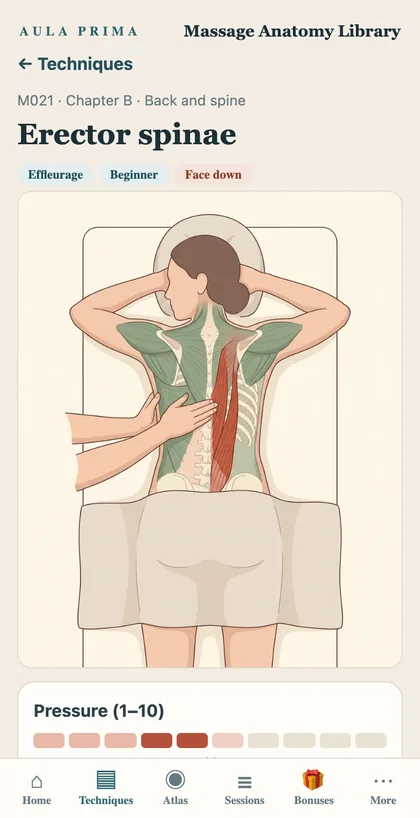
- Find a technique by area, stroke or muscle
- The 30-muscle atlas, searchable
- The ready-made sessions, one tap away
- All the PDFs inside, ready to print
This is for you if…
- You give massages and want to know which muscle you are working and why.
- You are in training and want to see the anatomy applied, not only the list of muscles.
- You receive pregnant clients, older adults or clients with discomfort and want to know what to adapt.
- You want to protect your hands and back with clear body mechanics.
- You prefer to have it on paper and on your phone.
Everything, for one payment
- The main book: 100 techniques, 30-muscle atlas and 6 ready-made sessions$42
- Bonus 1 · Pregnancy and Postpartum on the Table$19
- Bonus 2 · The Spine: What to Do and What Not to Do$11
- Bonus 3 · 20 Ready-Made Massage Sequences$10
- Bonus 4 · The Massage Therapist's Professional Kit$8
- The companion app · launch giftGift
One-time payment in USD · Credit and debit cards · Secure checkout
7-day guarantee
Open the cards, look for the techniques you use and try them in a real session. If it is not what you expected, write to us within 7 days and we refund your payment. No questions asked.
Frequently asked questions
Who is it for?
For massage therapists, massage students and experienced therapists who want to understand the anatomy behind each technique. It is written to be consulted before and during the session.
What kind of massage is it?
It is a library of base techniques (effleurage, kneading, friction, pressure, tapotement) applied by area. It does not belong to any school or brand; it uses the usual names of each technique.
Is it suitable for beginners?
Yes. Chapter A covers the base techniques and every card states its level (beginner, intermediate or advanced), so you can build progressively.
Does it replace my training or medical treatment?
No. It is educational material that complements your training. It is not medical advice, it does not diagnose or treat, and it does not replace a health professional. With any condition, the instruction of the client's health professional always prevails.
In what format is it?
PDF files in A4 size plus a companion app with search. Print what you need or use it from your phone.
When do I get it?
Right after payment you get access to the app and all the files by email. Nothing is shipped.
What if it does not work for me?
Write to us within 7 days of purchase and we will refund your payment, no questions asked.
Are the illustrations real photos?
No. The illustrations were generated with artificial intelligence and then reviewed. They are teaching drawings, not photographs of real people.
Aula Prima
Aula Prima creates reference libraries for practical subjects, one subject at a time. After art, yoga and Pilates, massage.
Massage knowing what is under your hand
$9.99Privacy
We use your email only to deliver your purchase and answer support requests. Payments are processed by our checkout provider; we never see or store your card details. We use advertising and analytics cookies to measure our ads.
Terms
Massage Anatomy Library is a digital product for personal use in your own work. You may print it and use it with your clients. You may not resell it or publish the files. The content is educational material and is not medical advice.
Refunds
You have 7 days from purchase to request a full refund. Write to the support address and we will return the payment to the original method.
Contact
Support: support email coming soon
just purchased Massage Anatomy Library